 by
by Introduction
Cloud computing has become an important part of modern technology. Businesses use it to store information, run applications, manage websites, and access computing resources over the internet. It also helps organisations scale their technology without purchasing and maintaining all their own physical servers.
For students interested in technology, cloud computing offers an opportunity to develop practical IT skills and explore different career paths. Beginners can start by understanding the basic concepts and gradually learn tools used by cloud professionals.
This guide explains cloud computing, popular platforms, essential skills, learning steps, certifications, and career opportunities.
What Is Cloud Computing?
Cloud computing is the delivery of computing services over the internet. These services include servers, storage, databases, networking, software, and processing power.
For example, when you store documents in Google Drive or use an online application, cloud infrastructure helps make those services available.
Instead of purchasing expensive hardware, businesses can use resources provided by cloud platforms and adjust their usage according to their requirements.
Students exploring a cloud computing course for beginners should first understand how these services work and why organisations use them.
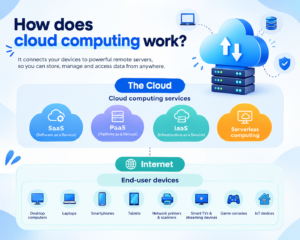
How Does Cloud Computing Work?
Cloud computing relies on remote servers hosted in data centres. These servers store information, process requests, and run applications that users access through the internet.
The process generally involves four steps:
- Access cloud resources: Users select the services they need.
- Connect through the internet: Devices and applications communicate with cloud servers.
- Store and process information: Cloud infrastructure handles data and application requests.
- Scale resources: Businesses can increase or reduce computing resources as their needs change.
This flexibility makes cloud computing useful for startups, educational institutions, and large organisations.
What Are the Main Types of Cloud Computing?
Cloud computing environments are commonly divided into three deployment models.
1. Public Cloud
A public cloud provides computing services to multiple customers through a third-party provider. AWS, Microsoft Azure, and Google Cloud are popular examples.
2. Private Cloud
A private cloud is dedicated to one organisation. It can offer greater control over infrastructure, access, and configurations.
3. Hybrid Cloud
A hybrid cloud combines private infrastructure with public cloud services. Businesses can keep certain resources in a private environment while using public cloud services for other tasks.
Understanding these models is an important part of cloud infrastructure training, as they explain how businesses organise and manage technology resources.
What Are the Different Cloud Service Models?
Cloud service models describe the types of resources a provider manages for its customers.
Infrastructure as a Service (IaaS)
IaaS provides virtual servers, storage, and networking resources. Users can configure operating systems and applications according to their needs.
Example: Amazon EC2.
Platform as a Service (PaaS)
PaaS provides an environment for developing, testing, and deploying applications without requiring developers to manage all the underlying infrastructure.
Example: Google App Engine.
Software as a Service (SaaS)
SaaS allows users to access software through the internet, usually without installing or maintaining the underlying application infrastructure.
Examples include Google Workspace and Microsoft 365.
Learning these service models helps beginners understand how cloud technology is used in real business environments.
Which Cloud Computing Tools Should Beginners Learn?
Beginners do not need to learn every platform at once. Start with one cloud provider and practise its basic services.
1. Amazon Web Services (AWS)
AWS offers services for computing, storage, databases, networking, and security. Beginners can explore Amazon EC2 for virtual servers and Amazon S3 for object storage.
Students interested in an AWS cloud computing course in Yamuna Vihar can look for a syllabus that covers cloud fundamentals, core AWS services, and practical exercises.
2. Microsoft Azure
Microsoft Azure provides cloud services for infrastructure, application development, databases, analytics, and business solutions. It can be useful for students interested in organisations that use Microsoft technologies.
3. Google Cloud
Google Cloud offers services for computing, storage, application development, analytics, and machine learning. Its learning resources can help beginners understand how cloud applications operate.
4. Linux and Networking
Linux commands and networking fundamentals are useful across many cloud environments. Learn about IP addresses, DNS, ports, file permissions, and basic server management.
These foundational skills can make it easier to understand cloud infrastructure and troubleshoot technical issues.
What Skills Are Required to Learn Cloud Computing?
You do not need advanced technical knowledge before starting. Build your skills gradually.
- Basic computer knowledge: Understand operating systems, files, and applications.
- Networking fundamentals: Learn IP addresses, DNS, ports, and network communication.
- Linux basics: Practise terminal commands, file management, and permissions.
- Cloud security: Understand access permissions and basic security practices.
- Problem-solving: Learn to investigate errors and follow technical documentation.
- Basic scripting: Python or shell scripting can help automate repetitive tasks.
When comparing cloud computing training in Yamuna Vihar, check whether the programme includes practical exercises alongside these fundamentals.
Similarly, students considering cloud computing training in Uttam Nagar should check the syllabus for platform practice, troubleshooting, and project-based learning.
How Can Students Start Learning Cloud Computing?
A step-by-step learning plan can help beginners develop confidence.
Step 1: Understand the Fundamentals
Learn what cloud computing is, why businesses use it, and how cloud services differ from traditional infrastructure.
Step 2: Study Networking and Linux
Practise basic networking concepts and Linux commands before moving on to more advanced cloud services.
Step 3: Choose One Cloud Platform
Start with AWS, Microsoft Azure, or Google Cloud. Explore its interface and learn how to use basic services.
Step 4: Build Small Projects
Try launching a virtual machine, creating a cloud storage setup, or deploying a simple website. Check the provider’s pricing and free-tier conditions before activating services.
Step 5: Learn Basic Security
Understand identity management, user permissions, secure configurations, and monitoring.
Step 6: Create a Project Portfolio
Document your projects, explain the tools you used, and describe how you solved problems. This can help demonstrate your practical skills to potential employers.
Students who prefer guided learning can compare a cloud computing course in Yamuna Vihar with placement support by checking what career guidance, interview preparation, and placement assistance are actually included.
Students searching for a cloud computing course in Uttam Nagar with placement support should make the same checks and compare practical training, course duration, and learning outcomes before enrolling.
What Are the Career Opportunities in Cloud Computing?
Cloud computing skills can support several IT career paths. The experience and qualifications required vary by role.
Cloud Support Associate
Helps users troubleshoot cloud services, investigate technical issues, and resolve infrastructure problems.
Cloud Administrator
Manages cloud resources, configurations, user access, and routine system operations.
Cloud Engineer
Works with cloud infrastructure, networking, deployments, automation, and system reliability. Practical experience is often important for these positions.
DevOps Engineer
Uses automation, deployment pipelines, monitoring, and infrastructure management to improve software delivery.
Cloud Security Engineer
Helps protect cloud environments through access controls, security monitoring, and secure configurations. These roles often require specialised skills.
Solutions Architect
Designs cloud solutions that meet an organisation’s technical and business requirements. These positions generally require substantial experience.
Beginners can work towards these roles by developing foundational knowledge, practising with cloud platforms, and building relevant projects.
Which Cloud Computing Certifications Can Beginners Explore?
Certifications can help learners organise their studies and demonstrate knowledge of a particular platform.
Some options to research include:
- AWS Certified Cloud Practitioner: Covers foundational AWS cloud concepts.
- Microsoft Certified: Azure Fundamentals (AZ-900): Introduces cloud concepts and core Azure services.
- Google Cloud Digital Leader: Covers cloud concepts and how Google Cloud services support business needs.
Check the official certification websites for current exam requirements, fees, and learning resources before preparing.
A certification can support your learning journey, but it does not guarantee employment. Practical knowledge and projects are also valuable.
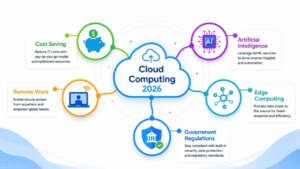
Is Cloud Computing a Good Career Choice in 2026?
Cloud computing can be a useful career direction for people interested in technology, networking, infrastructure, and problem-solving.
Organisations use cloud services to run applications, manage data, and support digital operations. However, job opportunities depend on practical skills, experience, location, and employer requirements.
Start by learning the fundamentals, practising with one cloud platform, and completing small projects. As your knowledge grows, you can explore cloud administration, DevOps, cloud engineering, or cloud security.
Frequently Asked Questions About Cloud Computing
1. Can beginners learn cloud computing?
Yes. Beginners can start with basic computer knowledge, networking concepts, and Linux before exploring a cloud platform.
2. Which cloud platform should I learn first?
AWS, Microsoft Azure, and Google Cloud are useful options. Choose one based on your learning goals and the roles you want to explore.
3. Do I need coding knowledge for cloud computing?
Not always for introductory learning. However, Python or shell scripting can help with automation and advanced cloud tasks.
4. How long does it take to learn cloud computing?
The time depends on your existing knowledge, study schedule, and goals. Learning the basics may take weeks, while developing job-ready skills requires continued practice.
Final Thoughts
Cloud computing supports many modern digital services and offers several opportunities for technical learning. By understanding cloud service models, exploring platforms such as AWS and Azure, and practising through projects, beginners can build a strong foundation.
Whether you are comparing training options in Yamuna Vihar or Uttam Nagar, focus on practical learning, a clear syllabus, and realistic career guidance. Choose a learning path that matches your current skills and long-term goals, and keep improving through consistent practice.visit us