 by
Introduction
Have you ever wondered what happens when you log in to a website, submit an online form, or check your college results? Behind these everyday activities, different technologies work together to make the website function properly.
If you are a student who enjoys exploring technology, full stack development can be an interesting skill to learn. It introduces you to website design, programming, data storage, and the logic that connects everything.
However, starting can feel difficult when you see so many programming languages and development tools. You do not need to understand everything on your first day. The smarter approach is to learn one concept at a time, experiment with code, and use your knowledge to create something of your own.
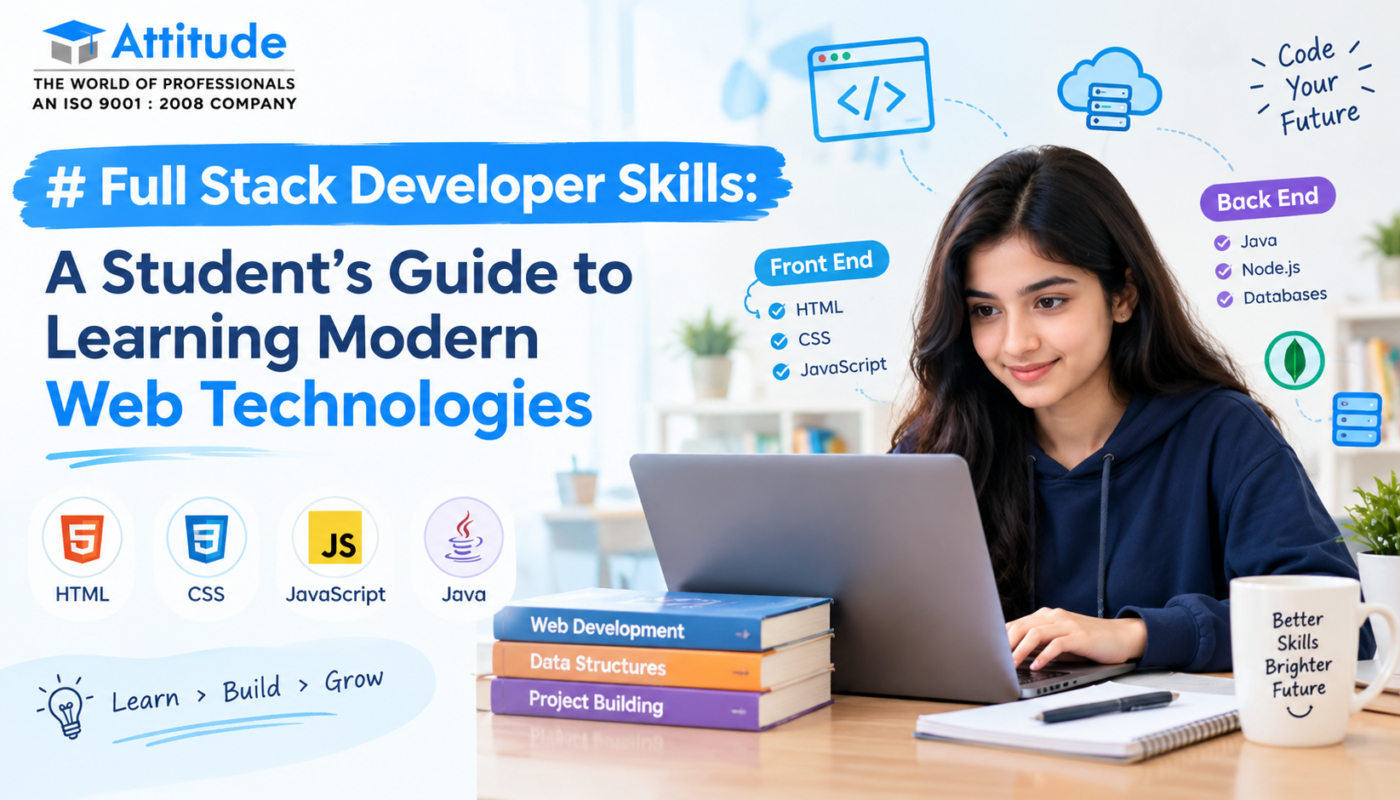
This guide explains what students should learn first, which technologies to explore, how to practise outside the classroom, and how to prepare for a future in web development.
What Does a Full Stack Developer Actually Do?
Imagine an online shopping website. You can browse products, add items to a cart, enter your address, and place an order. Each action depends on different parts of the application working together.
The part you interact with is called the front end. It includes the page layout, buttons, menus, images, and forms.
The back end manages operations such as processing requests, checking information, and communicating with a database. The database stores information that the application needs to use.
A full stack developement learns how these parts connect to create a working application. For students, this provides an opportunity to explore both the creative and technical sides of website development.
1. Begin by Creating Simple Web Pages
Your first goal should be to understand how a webpage is built. HTML provides the structure, while CSS controls the visual presentation.
You can begin with a page that introduces you, displays your educational background, and includes links to your favourite projects. Once the basic page works, experiment with fonts, spacing, images, colours, and layouts.
Try making the page usable on both a computer and a mobile phone. This introduces you to responsive design, an important consideration when developing websites for different screen sizes.
If you are exploring a full stack web development course in Yamuna Vihar, look for a learning programme that helps you build and improve webpages yourself instead of asking you only to memorise definitions.
2. Give Your Websites Useful Features with JavaScript
A webpage can look attractive but still offer limited interaction. JavaScript helps you make it respond to user actions.
For example, imagine building a study planner for your college routine. You could use JavaScript to add assignments, mark completed tasks, calculate remaining study time, or display messages when a deadline approaches.
While working on small features, you will learn programming concepts such as variables, functions, conditions, loops, and events.
Do not worry if your first program contains mistakes. Finding and fixing errors is part of learning to code. Students considering full stack development course in yamuna vihar should make sure their practice includes writing code, testing results, and correcting errors independently.
3. Discover How Modern Websites Use React
Once you are comfortable with JavaScript, you can explore React. It helps developers create user interfaces using reusable pieces called components.
Suppose you are developing a college website. The navigation menu, student profile, course card, and notification panel can each be designed as separate components. These components can then be organised into a complete interface.
Start with a small application rather than trying to build a complicated website immediately. A course listing page or personal dashboard is a reasonable project for practising components and managing displayed information.
When researching a full stack web development institute in Uttam Nagar, ask whether the programme introduces modern front-end development after covering the basics. Learning the fundamentals first can make advanced tools easier to understand.
4. Explore the Programming Behind a Website
Have you ever submitted a login form and received a personalised welcome message? The processing behind such features is an example of back-end development.
The back end receives requests, applies rules, works with stored information, and sends appropriate responses to the front end.
Students can explore several technologies for this work. Java is one option, while JavaScript with Node.js and Python are other possibilities. Each has its own uses, so you should choose a starting point based on your interests and learning goals.
For students interested in Java, a Java full stack developer course in Yamuna Vihar may be useful if it combines programming practice with web development, database concepts, and complete application projects.
Rather than trying to study several languages simultaneously, become comfortable with one approach before expanding your knowledge.
5. Understand How Websites Remember Information
Many applications need to store information between visits. A website might need to remember a user’s account details, display saved products, or retrieve a student’s academic records.
Databases make this possible. They help applications organise information so it can be searched, updated, and retrieved when required.
A beginner can start by learning how data is organised into tables and how SQL commands are used to work with records. MySQL and PostgreSQL are examples of database systems worth exploring.
A useful exercise is to design a simple student information database. Add sample records, retrieve selected details, and practise updating information.
If you are comparing a full stack Java developer course in Uttam Nagar, check whether you will learn how a back-end application connects to a database. This practical connection is important for understanding how complete applications operate.
6. Keep Your Coding Work Organised
As you create more projects, you will make changes, test new ideas, and sometimes need to return to an earlier version of your code. Learning to manage these changes can save time and help you work more confidently.
Git helps track changes to code, while GitHub provides a platform for hosting and sharing repositories.
You could create a separate repository for each project you complete. Include a short description explaining what the application does, which technologies you used, and what you learned while developing it.
This gradually creates a record of your progress. When comparing the best full stack developer course in Yamuna Vihar, consider whether students are encouraged to document projects and use tools commonly found in development workflows.
7. Turn Your Learning into Small Applications
Reading about programming is useful, but trying to solve a problem with code helps you discover what you actually understand.
Choose a project connected to your daily life. You might create a timetable for examinations, a website for a college society, or an application that helps students organise assignments.
Here are a few ideas you can adapt to your current skill level:
| What you could build | What you would learn |
| Personal introduction website | Page structure and visual design |
| Online quiz | Conditions, functions, and score calculation |
| Assignment tracker | Forms and interactive features |
| College event registration page | Form handling and validation |
| Student information system | Back-end logic and database operations |
Begin with the simplest working version. After that, decide what would make it more useful and add one improvement at a time.
For example, an assignment tracker might initially display tasks entered by a user. Later, you could add categories, completion status, and data storage.
Students searching for the best full stack developer course in Uttam Nagar can compare programmes by asking how much time is allocated to independent projects, practical assignments, and feedback on completed work.
8. Create a Learning Routine Around Your Studies
Students often have to balance programming with college assignments, examinations, and personal responsibilities. A realistic routine is more helpful than an ambitious plan that becomes difficult to maintain.
You could dedicate different study sessions to different activities. For example, one session might focus on learning a new concept, another on solving coding exercises, and another on improving a project.
Use this learning sequence as a starting point:
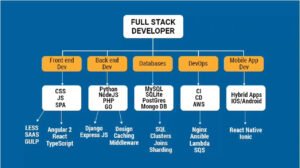
- Create webpages using HTML and CSS.
- Add interactions with JavaScript.
- Explore a front-end library such as React.
- Select a back-end technology and practise programming fundamentals.
- Learn how to store and retrieve information from a database.
- Connect the different parts of an application.
- Document your work and practise explaining how it functions.
If you want to become a full stack developer in Uttam Nagar, this roadmap can help you compare self-study with structured learning and identify which skills you need to develop next.
Measure progress by what you can build and explain, not just by the number of lessons you have completed.
10. Should Beginners Choose Java Full Stack Development?
Java full stack development is one learning path for students who want to combine programming with website and application development.
Java teaches concepts such as classes, objects, methods, and object-oriented programming. These ideas help developers organise code and understand how different parts of a software application interact.
A Java-focused pathway may also introduce front-end technologies, databases, APIs, and back-end frameworks. The exact topics depend on the learning programme.
Before enrolling in a Java full stack developer course in Yamuna Vihar, check that the syllabus gives you opportunities to write programs, understand errors, and build applications rather than simply watch demonstrations.
You should also consider your interests. If you enjoy logical problem-solving and want to understand how applications work behind the scenes, Java may be worth exploring.
The most suitable learning path is one that you can practise consistently and build upon as your understanding improves.
11. Prepare for Entry-Level Opportunities
Once you have developed your foundational skills, you can begin exploring internships and junior roles related to web development.
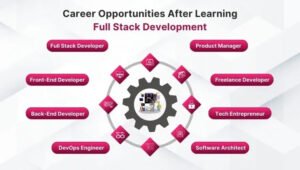
Depending on your knowledge and the requirements of individual employers, possible roles include web development intern, junior front-end developer, junior back-end developer, and junior full stack developer.
You can prepare by keeping your projects organised, practising basic technical questions, and learning to explain why you chose a particular solution to a coding problem.
Your portfolio does not need to contain dozens of applications. A few projects that you understand thoroughly can be more useful than many projects you cannot explain.
Remember that employers may evaluate different factors, including technical ability, communication, educational qualifications, and practical experience. Keep improving your skills while learning what your preferred roles require.
Frequently Asked Questions
Can I start full stack development while I am in college?
Yes. Begin with manageable study sessions and simple projects. As your understanding grows, you can gradually explore more advanced technologies.
Do I need to learn all programming languages?
No. Start with the technologies required for your chosen learning path. Understanding the fundamentals of one language is more useful than studying several languages without practising them.
How can I tell whether I understand a programming concept?
Try using it in a small project without following a tutorial step by step. If you can explain how it works, identify errors, and make changes independently, you are developing a stronger understanding.
Is a certificate enough to demonstrate my development skills?
A certificate can show that you completed a programme, but it does not demonstrate everything you can do. Practical projects, your understanding of the code, and your problem-solving ability can also help communicate your skills.
Final Thoughts
Learning full stack development is not about memorising every technology available. It is about understanding how websites work and gradually gaining the ability to build useful applications.
Start with simple webpages, learn programming fundamentals, and experiment with projects that interest you. When you encounter a difficult concept, break it into smaller parts and practise until it becomes clearer.
As you progress, keep your work organised and reflect on what each project teaches you. These habits can help you develop practical skills and make more informed decisions about your future in technology.visit us