 by
Introduction
Managing accounts, sales, purchases, and taxes is an important part of running a business. Every business needs to maintain proper financial records and follow government tax rules. In India, Goods and Services Tax (GST) is an important part of business accounting.
Calculating GST manually, preparing invoices, and maintaining tax records can take time. Accounting software such as BUSY helps businesses manage these activities more easily. It allows users to record transactions, calculate taxes, create GST invoices, and prepare accounting reports.
Learning these activities is an important part of E-Accounting because businesses increasingly use digital software to manage their financial work. Students interested in an e-accounting course in Yamuna Vihar can develop practical knowledge of accounting software and GST-related processes.
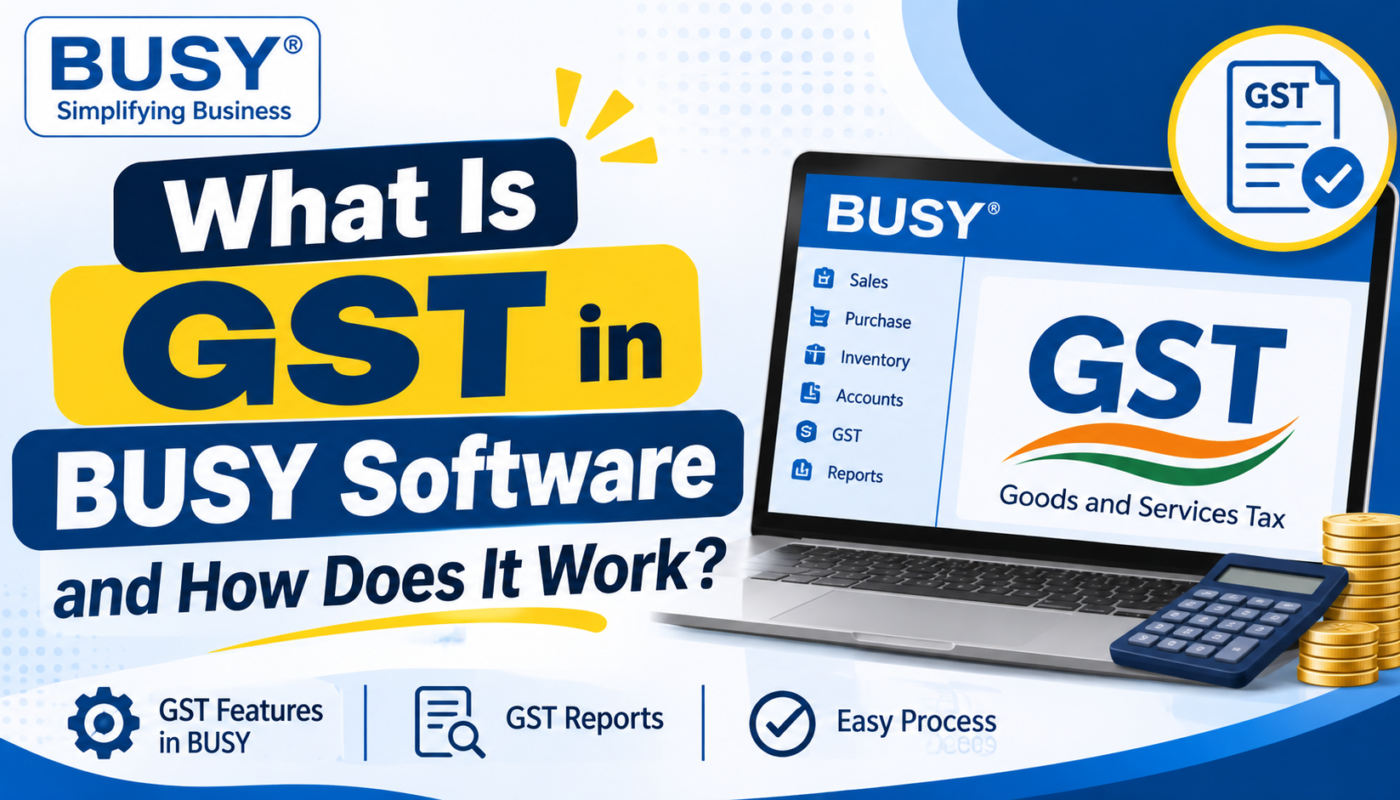
What Is GST in BUSY Software?
GST stands for Goods and Services Tax. It is an indirect tax applied to the supply of goods and services in India. GST was introduced on 1 July 2017 to bring several indirect taxes under a common tax system.
BUSY is accounting and business management software that helps businesses maintain financial records and manage GST transactions.
With BUSY Software, users can:
- Record sales and purchase transactions.
- Create GST invoices.
- Calculate applicable GST.
- Maintain customer and supplier accounts.
- Manage inventory and stock records.
- Generate GST-related reports.
Understanding these features is useful for students learning through an e-Accounting. It introduces them to the software and processes used in everyday business accounting. Students can also explore GST Classes in Yamuna Vihar to understand how GST concepts are applied in practical accounting work.
How Does GST Work in BUSY Software?
BUSY provides different features that help businesses manage GST transactions. Let’s understand the basic process step by step.
1. Creating a Company
The first step is to create a company in BUSY Software. Users need to enter basic business information, such as:
- Company name and address
- Financial year
- State and business details
- GST registration information, where applicable
After creating the company, users can configure the accounting and GST settings according to their business requirements.
Students attending e-Accounting Classes in Yamuna Vihar can practise creating company accounts and understanding how business information is maintained in accounting software.
2. Setting Up GST Details
After creating a company, users need to enable GST and enter the relevant registration details. This may include the GSTIN, state, registration type, and other applicable tax settings.
Users can also configure GST tax categories and rates according to the nature of their business transactions.
Correct GST configuration is important because it helps the software calculate taxes properly during sales and purchase entries. Learning this process through a GST Training can help beginners understand how GST settings are managed before recording transactions.
Students can also develop these skills through an e-Accounting Coaching Centre in Yamuna Vihar, where they can understand the connection between accounting software and taxation.
3. Creating GST Invoices
A GST invoice is an important document used when a business sells taxable goods or services. BUSY allows users to prepare invoices by entering customer details, product names, quantities, prices, and applicable GST rates.
For example, when a business sells a taxable product, the software calculates the applicable GST based on the selected tax rate and transaction details.
A GST invoice generally includes:
- Supplier and customer details
- GSTIN, where applicable
- Invoice number and date
- Product or service description
- Taxable value
- Applicable GST rate and tax amount
Students learning through GST Coaching Institute in Uttam nagar programmes can practise creating invoices and understand how billing and tax calculations work in real business situations.
4. Recording Sales and Purchase Entries
Businesses need to maintain proper records of the goods and services they sell and purchase. BUSY helps users record these transactions through sales and purchase vouchers.
When a business sells goods, the applicable output GST is recorded. When it purchases eligible goods or services, the input GST details can be maintained.
These records help businesses calculate their tax liability and identify eligible Input Tax Credit (ITC), subject to GST rules and conditions.
Learning sales and purchase entries is an important skill for anyone interested in a GST Coaching Centre in Yamuna Vihar, as these activities are part of regular accounting work.
5. Generating GST Reports
GST reports help businesses review their transactions and organise information required for tax compliance.
BUSY provides reports that help users check sales, purchases, tax amounts, and other GST-related details. These reports can support GST return preparation and reconciliation.
Students can learn how to review transaction records, identify differences, and organise financial information for reporting.
Understanding these activities through GST programmes can help learners become familiar with digital tax management and basic GST compliance processes.
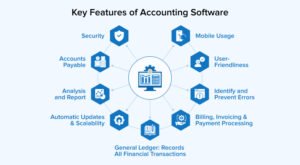
Important Features of BUSY Accounting Software
BUSY offers several features that help businesses manage their daily accounting activities.
- GST Billing: Create sales invoices with applicable GST calculations.
- Tax Management: Maintain input and output tax information.
- Sales and Purchase Management: Record daily business transactions.
- GST Reports: Review tax-related information and transaction summaries.
- Inventory Management: Maintain product details and stock records.
- Accounting Management: Manage ledgers, vouchers, and financial statements.
These features make E-Accounting software training useful for students who want to understand how businesses manage accounts through digital applications.
Why Should Students Learn GST and BUSY Software?
Learning GST and BUSY Software gives students practical knowledge of how accounting activities are performed in businesses.
Some important benefits include:
- Practical Accounting Skills: Learn how to record sales, purchases, and other financial transactions.
- GST Knowledge: Understand GST calculations, invoices, and tax reports.
- Better Accuracy: Learn how accounting software helps reduce manual calculation errors.
- Software Experience: Become familiar with digital accounting tools used by businesses.
- Career Preparation: Develop skills useful for entry-level accounting and billing roles.
Students interested in a GST Training Institute in yamuna vihar can explore these skills to understand the practical side of accounting and taxation. They can also consider an e-accounting course in Uttam Nagar to develop broader knowledge of digital accounting applications.
Career Opportunities After Learning GST and BUSY Software
After developing practical accounting skills, students can explore different entry-level job roles depending on their qualifications and experience.
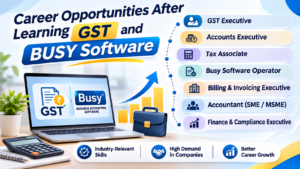
Some possible career opportunities include:
- Accounts Assistant
- Billing Executive
- GST Assistant
- Junior Accountant
- Accounts Executive
- Finance Support Executive
Students can also explore e-filing training in Uttam Nagar to understand digital filing processes and the importance of accurate financial information.
Conclusion
GST in BUSY Software helps businesses manage tax calculations, billing, sales, purchases, and financial records in an organised way. It reduces the effort involved in manual calculations and makes everyday accounting activities easier to manage.
For students, learning GST through practical accounting software is a useful way to understand how businesses handle their financial activities. By practising invoice creation, voucher entries, ledger management, and GST reports, learners can build a strong foundation in GST and E-Accounting.
As more businesses use digital accounting tools, knowledge of GST and accounting software can help students develop useful skills for future opportunities in accounts, billing, and finance.
Visit: Attitude Academy to explore accounting and software learning opportunities.