 by
Websites and web applications are an important part of our daily lives. From online shopping platforms to educational websites and banking applications, almost every business depends on web technology. But have you ever wondered how these websites are created and how they work?
Web development mainly has two important parts: Front-End Development and Back-End Development. Both play different roles in building a website, but they work together to provide a smooth user experience.
Understanding the difference between these two areas can help beginners choose the right learning path and develop useful technical skills.
What Is Front-End Development?
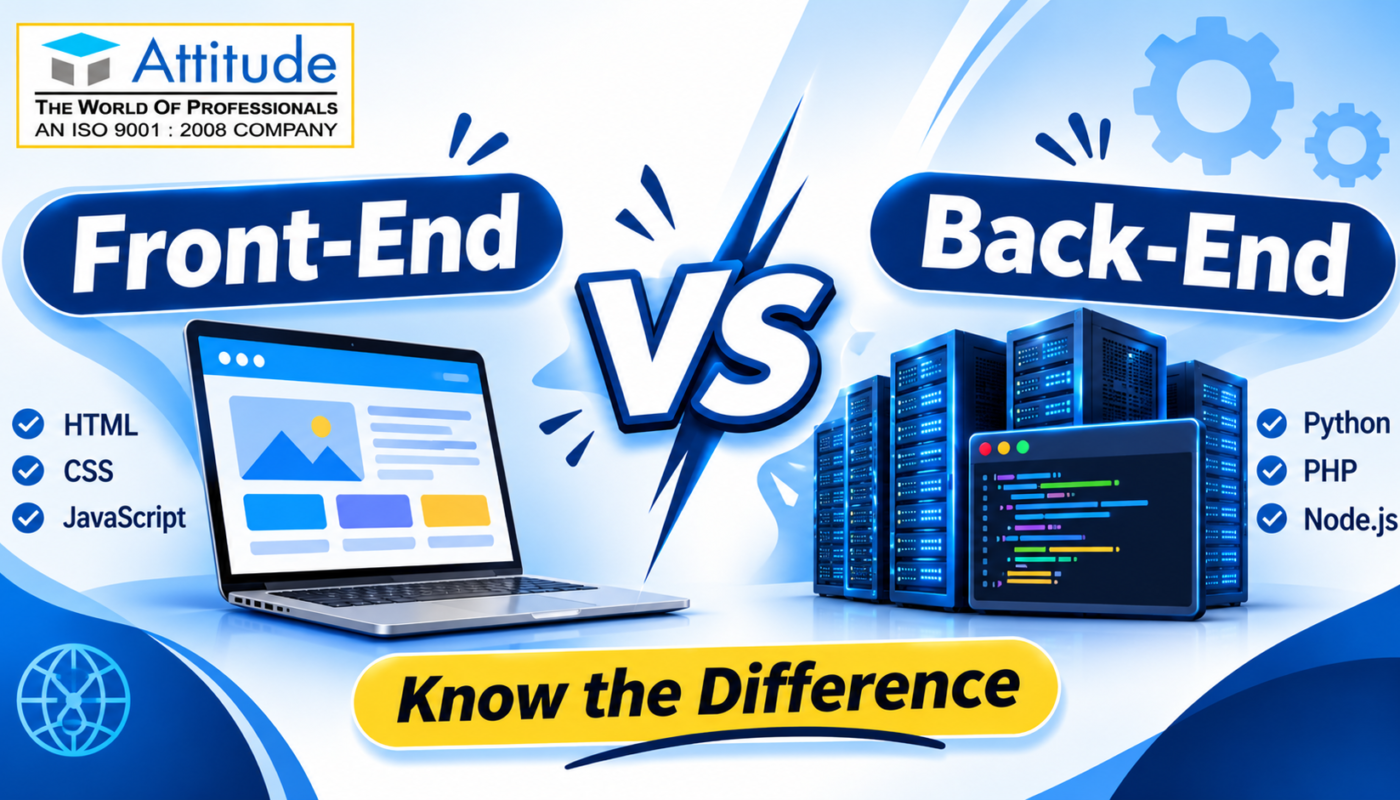
Front-End Development is the process of creating the visible part of a website that users interact with directly. It includes website layouts, menus, buttons, images, forms, colours, and other design elements.
For example, when you open an online shopping website, the product images, search bar, navigation menu, and shopping cart are all part of the front end.
Front-end developers make sure that websites look attractive, work properly, and provide a smooth experience across different devices.
Important Technologies Used in Front-End Development
Some common technologies used by front-end developers include:
- HTML: Creates the basic structure of a webpage.
- CSS: Controls the appearance, colours, spacing, and layout of a website.
- JavaScript: Adds interactive features such as dropdown menus, animations, and dynamic content.
- React: A popular JavaScript library used to build interactive user interfaces.
- Bootstrap: Helps developers create responsive website layouts.
Students interested in learning these technologies can explore a Web Development to understand how websites are designed and developed through practical projects.
What Is Back-End Development?
Back-End Development focuses on the server-side functionality of a website. It manages the processes that users cannot see directly but are necessary for a website to work properly.
For example, when you log in to a website, the back end checks your login details. When you purchase a product, it processes the order and stores the information in a database.
Back-end developers work with servers, databases, application logic, and security systems to keep websites running smoothly.
Important Technologies Used in Back-End Development
Some commonly used back-end technologies include:
- Python: Used to develop applications and handle server-side operations.
- PHP: A programming language commonly used for dynamic websites.
- Java: Used to build large and secure applications.
- Node.js: Allows developers to use JavaScript for server-side development.
- MySQL: A database management system used to store and organise information.
- MongoDB: A database used to manage flexible, document-based data.
Learning these technologies through practical exercises can help students understand how websites manage information and process user requests.
Front-End vs Back-End Development: Key Differences
Although both areas are important in website development, their responsibilities and technologies are different.
| Front-End Development | Back-End Development |
| Works on the visible part of a website | Works on the server-side functionality |
| Focuses on user experience and design | Focuses on logic and data management |
| Uses HTML, CSS, and JavaScript | Uses Python, PHP, Java, and Node.js |
| Handles buttons, layouts, and menus | Handles databases, servers, and authentication |
| Directly interacts with website visitors | Processes information behind the scenes |
Both front-end and back-end development are essential for creating complete and functional websites.
How Do Front-End and Back-End Work Together?
Front-end and back-end development work together to make websites functional.
Consider an online registration form. The front end displays the form where users enter their name, email address, and password. After submitting the information, the back end receives the details, checks the information, and stores it in a database.
The front end displays the result to the user, while the back end manages the actual processing.
This connection allows websites to perform tasks such as:
- User registration and login.
- Online payments and transactions.
- Product searches and shopping orders.
- Contact forms and information submissions.
- User account management.
Understanding this connection is an important part of practical web development learning.
What Is Full Stack Development?
Full Stack Development combines both front-end and back-end development. A full-stack developer understands how to create the visible parts of a website as well as manage its server-side operations.
For example, a full-stack developer may design a website’s homepage, create a registration system, connect a database, and manage how information is processed.
This skill set can be useful for startups, software companies, web development agencies, and businesses that need complete website solutions.
Students looking for Web Development Classes in Yamuna Vihar can explore both front-end and back-end concepts to understand how complete websites are built.
Which Is Better: Front-End or Back-End Development?
There is no single answer because both fields offer different learning experiences and career opportunities.
Choose Front-End Development if:
- You enjoy designing website layouts.
- You like working with colours, fonts, and visual elements.
- You are interested in user experience.
- You enjoy creating interactive website features.
Choose Back-End Development if:
- You enjoy logical thinking and problem-solving.
- You are interested in databases and servers.
- You like working with programming languages.
- You want to understand how applications process information.
If you are a beginner, start by understanding basic HTML, CSS, and JavaScript. You can then explore server-side programming and database concepts according to your interests.
Career Opportunities After Learning Web Development
Web development skills are useful across many industries because businesses need websites and online applications to reach customers and manage their services.
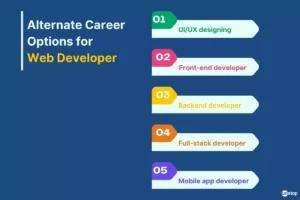
After developing practical skills, learners can explore roles such as:
- Front-End Developer
- Back-End Developer
- Full Stack Developer
- Web Designer
- Junior Web Developer
- WordPress Developer
Students searching for Web Development Training in Uttam Nagar can focus on learning website creation, coding fundamentals, and practical development skills.
Choosing a Web Development Training Institute in Uttam Nagar can help beginners understand different technologies through structured learning and hands-on projects.
Similarly, a Web Development Centre in Uttam Nagar can be a learning option for students who want to develop their technical knowledge and work on website projects.
How to Start Learning Web Development?
Beginners can follow a simple learning path to build a strong foundation:
- Learn HTML to understand webpage structure.
- Practise CSS to design attractive and responsive layouts.
- Learn JavaScript to add interactive features.
- Understand databases and server-side programming.
- Build small website projects to improve practical skills.
- Create a portfolio to showcase your work.
Students can also consider a Web Development Course in Uttam Nagar to develop the technical skills needed for website creation. Learning through Web Development Classes in Uttam Nagar can help beginners understand front-end and back-end concepts step by step.
Conclusion
Front-End and Back-End Development are two essential parts of modern website creation. Front-end development focuses on the design and user experience, while back-end development manages the server, database, and functionality behind a website.
Both areas offer valuable learning opportunities and career options. Beginners can start with HTML, CSS, and JavaScript before exploring back-end technologies and full-stack development.
With regular practice, real-world projects, and a strong understanding of web technologies, students can build the skills required to start a career in web development.visit us