 by
Introduction
The internet has become an important part of our daily lives. People use websites, mobile apps, online banking and digital platforms for almost everything. Businesses also store important information online, which makes protecting digital data more important than ever. However, cyber threats such as hacking, phishing, malware and data theft are increasing. This has created a growing need for professionals who understand digital security. Students interested in this field can start by exploring a cyber security course to understand the fundamentals of protecting digital systems.
This is where Ethical Hacking and Cyber Security become important. Both fields focus on protecting computers, networks and digital information, but they have different responsibilities. Many students who want to build a career in technology often ask: What is the difference between ethical hacking and cyber security? Are they the same, or do they require different skills?
What Is Cyber Security?
Cyber Security refers to the practice of protecting computers, networks, websites, applications and digital information from unauthorised access, attacks and damage.
Its main purpose is to keep digital systems safe and ensure that sensitive information remains protected. Organisations use different security tools, policies and technologies to reduce cyber risks. Students looking for a cyber security course in Uttam Nagar can begin by understanding these basic concepts before exploring specialised areas of security.
For example, when you use internet banking, cyber security helps protect your login details, personal information and financial transactions.
Why Is Cyber Security Important?
Cyber Security is important for individuals, businesses and organisations because it helps:
- Protect personal and business information.
- Prevent unauthorised access to computer systems.
- Secure online payments and digital transactions.
- Reduce the risk of malware and ransomware attacks.
- Maintain the privacy of customers and employees.
- Identify and respond to security incidents.
Businesses need trained professionals who can understand these risks and help maintain secure digital environments. This is one reason why cyber security training in Yamuna Vihar can be a useful learning option for students interested in developing technical knowledge.
What Is Ethical Hacking?
Ethical Hacking is the process of testing computer systems, networks or applications to identify security weaknesses with proper permission.
An ethical hacker uses authorised testing methods to find vulnerabilities before malicious hackers can exploit them. Their work helps organisations understand where their security systems need improvement.
For example, a company may hire an ethical hacker to test its website and check whether attackers could access confidential information through security gaps. Students exploring cyber security training in Uttam Nagar should also understand the importance of ethical practices and authorised security testing.
Ethical hacking must always be performed with clear authorisation and within an agreed scope.
What Does an Ethical Hacker Do?
An ethical hacker may perform activities such as:
- Identifying weaknesses in websites and networks.
- Conducting authorised penetration tests.
- Checking systems for security vulnerabilities.
- Testing security controls.
- Preparing reports about identified risks.
- Recommending ways to improve system security.
Ethical Hacking vs Cyber Security: What Are the Main Differences?
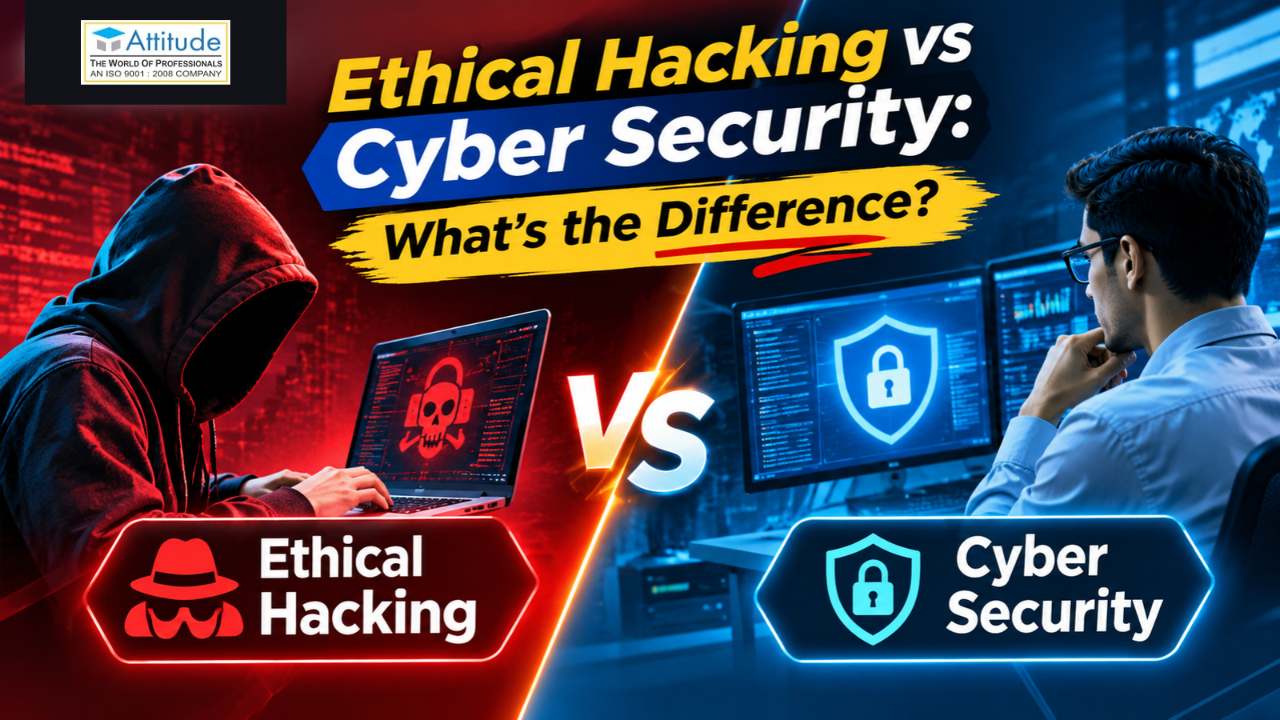
Although ethical hacking is closely related to cyber security, both have different areas of focus. Cyber security covers the overall protection of digital systems, while ethical hacking focuses on testing those systems for weaknesses.
Here are the main differences:
| Comparison | Ethical Hacking | Cyber Security |
| Meaning | Identifying security weaknesses with permission | Protecting systems, networks and digital information |
| Main Focus | Finding vulnerabilities | Preventing and managing cyber threats |
| Approach | Testing and evaluating security | Monitoring, protection and risk management |
| Activities | Penetration testing and vulnerability assessment | Security monitoring, access control and incident response |
| Objective | Discover weaknesses before attackers exploit them | Keep digital systems and information secure |
| Work Area | Security testing and authorised assessments | Overall information and network protection |
Both fields support each other. Ethical hackers help discover security gaps, while cyber security professionals work on protecting systems and managing security risks.
Skills Required for Ethical Hacking
Students interested in ethical hacking need to develop technical knowledge and problem-solving abilities. Beginners should first understand how computers and networks work before moving towards advanced security testing. A good cyber security institute in Yamuna Vihar should help students understand these foundational topics before introducing more advanced concepts.
Some important skills include:
- Networking Fundamentals: Understanding IP addresses, DNS, ports, protocols and network communication.
- Linux Basics: Learning Linux commands and understanding how operating systems work.
- Programming Fundamentals: Basic knowledge of Python or other programming languages can help with security testing and automation.
- Vulnerability Assessment: Understanding how security weaknesses are identified and evaluated.
- Penetration Testing Concepts: Learning how authorised security testing is planned and performed.
- Problem-Solving Skills: Analysing technical problems and finding suitable solutions.
Skills Required for Cyber Security
Cyber security professionals need a combination of technical and analytical skills to protect digital systems. Students comparing different learning options can look for a cyber security institute in Uttam Nagar that covers essential topics such as network security, system protection and security monitoring.
Important skills include:
- Network Security: Understanding how to protect computer networks.
- System Security: Learning how to secure operating systems and devices.
- Risk Management: Identifying possible threats and understanding their impact.
- Security Monitoring: Observing systems for unusual or suspicious activities.
- Incident Response: Understanding how to respond when a security incident occurs.
- Data Protection: Learning methods to protect sensitive information.
Students can develop these skills gradually through structured learning and practical exercises.
Career Opportunities in Ethical Hacking and Cyber Security
Both fields offer different career opportunities in the technology industry. Organisations across banking, healthcare, education, e-commerce and IT services need professionals who understand digital security.
Some common job roles include:
- Ethical Hacker: Tests systems and applications with permission to identify security weaknesses.
- Penetration Tester: Performs authorised security tests to evaluate how systems may be vulnerable to attacks.
- Cyber Security Analyst: Monitors systems, identifies security risks and helps protect organisational information.
- SOC Analyst: Works in a Security Operations Centre to monitor security alerts and investigate suspicious activities.
- Information Security Specialist: Helps organisations protect confidential information through security policies and technical controls.
The skills and qualifications required for these roles may differ depending on the employer and job responsibilities.
Which Is Better for Beginners: Ethical Hacking or Cyber Security?
Both are useful career paths, but the right choice depends on your interests and learning goals.
If you enjoy understanding how systems work, identifying technical weaknesses and testing security with permission, ethical hacking may interest you.
If you prefer protecting networks, monitoring threats, managing security risks and keeping information safe, cyber security may be a better starting point.
For beginners, learning general cyber security fundamentals first can provide a strong foundation. After understanding networking, operating systems and basic security concepts, students can explore specialised areas such as ethical hacking, penetration testing or security operations.
How Can Students Start Learning Cyber Security?
Starting a career in cyber security does not require advanced technical knowledge from the beginning. Students can build their skills step by step.
Here are some useful learning steps:
- Learn Computer Fundamentals: Understand operating systems, computer networks and basic troubleshooting.
- Understand Networking: Study IP addresses, DNS, routers, ports and common network protocols.
- Explore Linux: Practise basic Linux commands and learn how the operating system works.
- Study Security Fundamentals: Understand malware, phishing, authentication and common cyber threats.
- Practise in Legal Learning Environments: Use authorised labs and beginner-friendly exercises to understand security concepts.
- Build Practical Knowledge: Work on small learning projects and document what you learn.
- Explore Specialisations: Choose an area such as ethical hacking, network security or security analysis.
Before enrolling in a programme, students should compare the syllabus, practical learning opportunities, trainer support and course structure. A suitable learning environment can help beginners develop technical knowledge and understand the responsibilities involved in cyber security.
Conclusion
Ethical Hacking and Cyber Security are closely connected, but they are not exactly the same. Cyber security focuses on protecting digital systems and information, whereas ethical hacking involves testing systems with permission to identify security weaknesses.
Both fields offer opportunities for students interested in computers, networking and technology. Beginners should start with basic computer knowledge, networking and security fundamentals before choosing a specialisation. With regular practice, technical learning and the right guidance, students can gradually develop the skills needed to explore careers in the cyber security industry. Visit us
Frequently Asked Questions (FAQs)
- Is ethical hacking the same as cyber security?
No. Ethical hacking focuses on identifying security weaknesses with permission, while cyber security covers the broader protection of digital systems and information.
- Is ethical hacking a part of cyber security?
Yes. Ethical hacking is one specialised area within the broader field of cyber security.
- Can beginners learn ethical hacking?
Yes. Beginners can start by learning computer fundamentals, networking, Linux and basic security concepts before moving towards ethical hacking.
- Which programming language is useful for ethical hacking?
Python is useful for beginners because it helps with scripting and automation. Knowledge of other programming languages can also be helpful.
- What are the career options after learning cyber security?
Some career options include Cyber Security Analyst, Ethical Hacker, Penetration Tester, SOC Analyst and Information Security Specialist.
- How should I choose a cyber security course?
Compare the syllabus, practical exercises, trainer support and learning environment. Choose a programme that matches your current knowledge and career goals.