Enter Your Details


LLMs,Advanced Prompt Engineering,ChatGPT, Gemini, Claude & Open-Source Models
Generative AI Fundamentals & LLMs
Advanced Prompt Engineering
ChatGPT, Gemini, Claude & Open-Source Models
LangChain & LlamaIndex Frameworks
Retrieval-Augmented Generation (RAG)
Vector Databases & Semantic Search
AI Agents & Agentic AI Workflows
Text, Image, Audio & Video Generation
AI-Powered Application Development
OpenAI API & LLM API Integration
Fine-Tuning & Model Customization
AI Automation & Intelligent Workflows
Embeddings and Document-Based AI Assistants
Build AI Chatbots & Knowledge Assistants
Responsible AI, Security & Ethics
Hands-on Labs & Real-World AI Projects
Portfolio Development & Career Preparation
Industry-Oriented Professional Training
Generative AI Course Requirements (Prerequisites)
This course is designed for beginners, students, graduates, and working professionals.
No prior AI experience is required. However, the following skills will help learners get the most out of the program:
* Basic computer and internet knowledge
* Familiarity with Windows, Linux, or macOS
* Basic understanding of programming concepts (preferred but not mandatory)

.jpg)
.jpg)
7 Days Money back Guarantee*
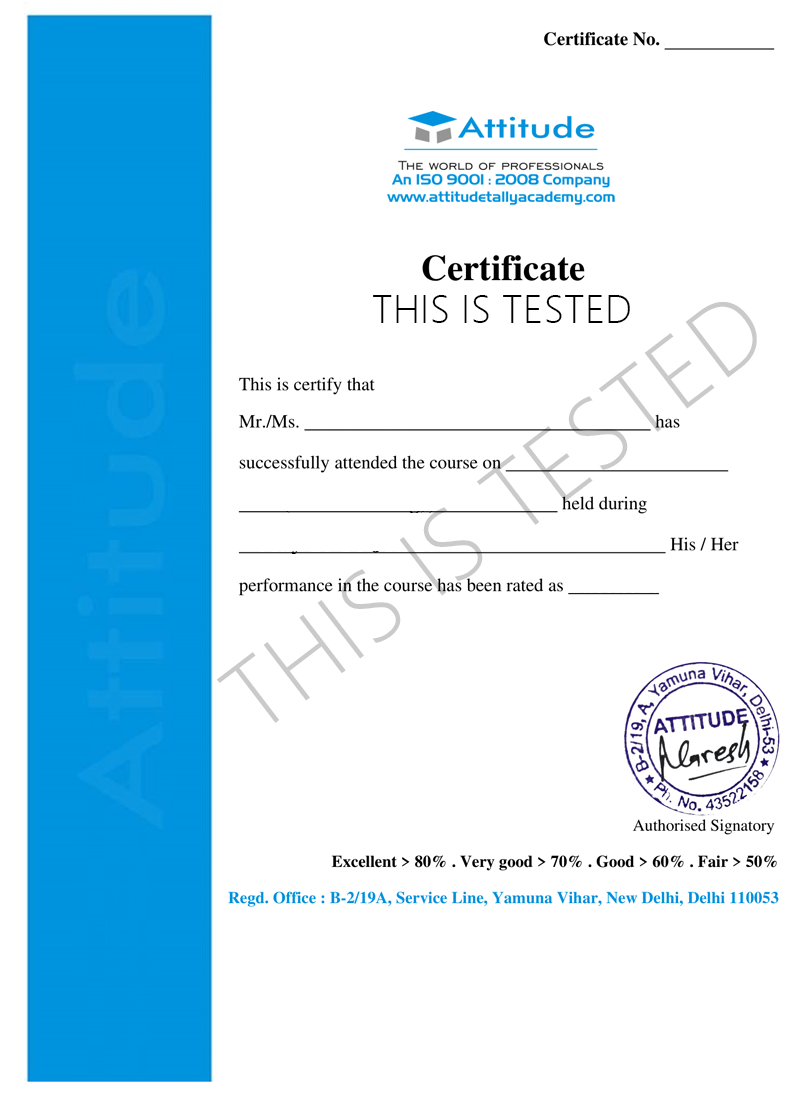
Take the final exam online to complete the Generative AI (Gen AI) Professional Training Program after which you will be able to download your certificate from Attitude Trainings



Generative AI Fundamentals & LLMs
Advanced Prompt Engineering
ChatGPT, Gemini, Claude & Open-Source Models
LangChain & LlamaIndex Frameworks
Retrieval-Augmented Generation (RAG)
Vector Databases & Semantic Search
AI Agents & Agentic AI Workflows
Text, Image, Audio & Video Generation
AI-Powered Application Development
OpenAI API & LLM API Integration
Fine-Tuning & Model Customization
AI Automation & Intelligent Workflows
Embeddings and Document-Based AI Assistants
Build AI Chatbots & Knowledge Assistants
Responsible AI, Security & Ethics
Hands-on Labs & Real-World AI Projects
Portfolio Development & Career Preparation
Industry-Oriented Professional Training
Generative AI Course Requirements (Prerequisites)
This course is designed for beginners, students, graduates, and working professionals.
No prior AI experience is required. However, the following skills will help learners get the most out of the program:
* Basic computer and internet knowledge
* Familiarity with Windows, Linux, or macOS
* Basic understanding of programming concepts (preferred but not mandatory)

Take all of your face to face classes with trainer & get Live Sessions with Trainer for Doubts Clearing

Test your knowledge through quizzes & module tests & offline assessment

Get hands on practice by doing assignments and project

Take the final exam to get certified in Generative AI (Gen AI) Professional Training Program
The Generative AI Professional Training Program is designed to prepare students and working professionals for the rapidly evolving world of Artificial Intelligence. The program provides practical knowledge of Large Language Models (LLMs), Prompt Engineering, Retrieval-Augmented Generation (RAG), AI Agents, LangChain, LlamaIndex, vector databases, and modern Generative AI tools.
Generative AI is expected to become an important part of almost every industry. Organizations are increasingly exploring AI-powered assistants, intelligent automation, content generation, and AI agents to improve productivity and customer experiences. Professionals who understand how to build and integrate AI solutions can be well positioned for future technology careers.
After developing strong Generative AI skills, learners can explore career opportunities such as Generative AI Developer, AI Engineer, LLM Engineer, Prompt Engineer, AI Automation Specialist, Machine Learning Engineer, RAG Developer, and AI Application Developer. In India, entry-level opportunities may typically range from ₹4–8 LPA, while experienced professionals with strong AI and software development skills may earn ₹10–25 LPA or higher, depending on experience, expertise, company, and location.
Generative AI has applications in education, healthcare, banking, e-commerce, digital marketing, software development, customer service, cybersecurity, research, content creation, and business automation. It can power intelligent chatbots, document assistants, recommendation systems, content-generation platforms, and automated workflows.
Key areas covered in Generative AI include Large Language Models (LLMs), Prompt Engineering, Natural Language Processing, RAG, AI Agents, Multimodal AI, Image Generation, Code Generation, Vector Databases, Embeddings, Fine-Tuning, and AI Automation.
This professional training program focuses on hands-on learning and real-world projects, helping learners develop practical skills to build modern AI-powered applications and prepare for emerging career opportunities.
3.1 Guardarials
3.2 Runtime
3.3 Context Engineering
3.4 Model Context Protocol (MCP)
3.5 Human In the Loop
3.6 Multi Agent
3.7 Retrieval
3.8 Long term memory
4.1 Building RAG base AI agents
4.2 Question and Answers Chatbots
4.3 Building multitool AI agents
4.4 Langsmith
4.5 Test
4.6 Agent Chat UI
Deployment & Observability
The Generative AI Professional Training Program is designed to prepare students and working professionals for the rapidly evolving world of Artificial Intelligence. The program provides practical knowledge of Large Language Models (LLMs), Prompt Engineering, Retrieval-Augmented Generation (RAG), AI Agents, LangChain, LlamaIndex, vector databases, and modern Generative AI tools.
Generative AI is expected to become an important part of almost every industry. Organizations are increasingly exploring AI-powered assistants, intelligent automation, content generation, and AI agents to improve productivity and customer experiences. Professionals who understand how to build and integrate AI solutions can be well positioned for future technology careers.
After developing strong Generative AI skills, learners can explore career opportunities such as Generative AI Developer, AI Engineer, LLM Engineer, Prompt Engineer, AI Automation Specialist, Machine Learning Engineer, RAG Developer, and AI Application Developer. In India, entry-level opportunities may typically range from ₹4–8 LPA, while experienced professionals with strong AI and software development skills may earn ₹10–25 LPA or higher, depending on experience, expertise, company, and location.
Generative AI has applications in education, healthcare, banking, e-commerce, digital marketing, software development, customer service, cybersecurity, research, content creation, and business automation. It can power intelligent chatbots, document assistants, recommendation systems, content-generation platforms, and automated workflows.
Key areas covered in Generative AI include Large Language Models (LLMs), Prompt Engineering, Natural Language Processing, RAG, AI Agents, Multimodal AI, Image Generation, Code Generation, Vector Databases, Embeddings, Fine-Tuning, and AI Automation.
This professional training program focuses on hands-on learning and real-world projects, helping learners develop practical skills to build modern AI-powered applications and prepare for emerging career opportunities.
3.1 Guardarials
3.2 Runtime
3.3 Context Engineering
3.4 Model Context Protocol (MCP)
3.5 Human In the Loop
3.6 Multi Agent
3.7 Retrieval
3.8 Long term memory
4.1 Building RAG base AI agents
4.2 Question and Answers Chatbots
4.3 Building multitool AI agents
4.4 Langsmith
4.5 Test
4.6 Agent Chat UI
Deployment & Observability
Take all of your face to face classes with trainer & get Live Sessions with Trainer for Doubts Clearing
Test your knowledge through quizzes & module tests & offline assessment
Get hands on practice by doing assignments and project
Take the final exam to get certified in Generative AI (Gen AI) Professional Training Program
Build future-ready AI skills with our Generative AI Professional Training Program. Learn how modern Generative AI applications work through practical training in Prompt Engineering, Large Language Models (LLMs), Retrieval-Augmented Generation (RAG), LangChain, LlamaIndex, Vector Databases, AI Agents, Agentic AI, OpenAI API, Hugging Face, and AI Automation. Work on hands-on projects to build intelligent chatbots, document-based AI assistants, RAG applications, AI-powered automation workflows, and real-world Generative AI solutions. The course is designed for students, developers, graduates, and working professionals who want to develop practical Generative AI skills and prepare for emerging career opportunities such as Generative AI Developer, AI Engineer, LLM Engineer, RAG Developer, AI Automation Specialist, and AI Application Developer.

You can post your doubts on the Q&A forum which will be answered by the teachers within 24 hours.