 by
by Introduction
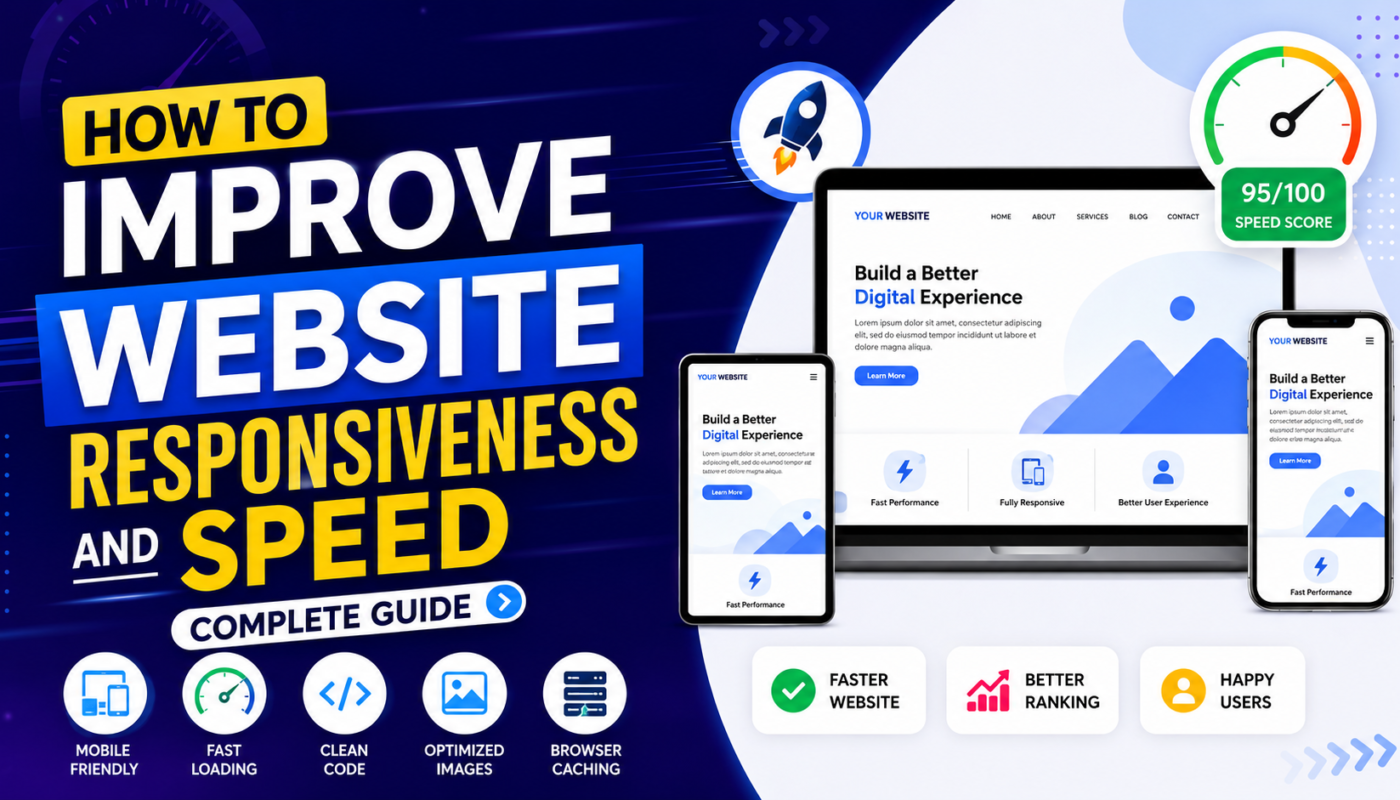
A good website is not just about design—it’s about performance. If a website loads slowly or doesn’t work properly on mobile devices, users quickly lose interest. For students learning web development, understanding how to improve speed and responsiveness is essential.
When students start learning through a Web development they often discover that performance optimization is just as important as coding itself.
Why Speed and Responsiveness Matter
Today’s users expect websites to load within seconds. A delay of even a few seconds can increase bounce rates and reduce engagement. Also, search engines prefer fast and mobile-friendly websites, which means speed directly affects SEO.
During Web development training in Yamuna Vihar or while attending Web Development Classes in Uttam Nagar, students are introduced to real examples where performance improvements made a huge difference.
Practical Ways to Improve Website Performance
1. Optimize Images
Images are often the biggest reason for slow websites. Always compress images and use proper formats to reduce file size without losing quality.
Students learning at a Web Development Training Institute in Yamuna Vihar are usually taught how to manage media efficiently from the beginning.
2. Make Your Website Responsive
A responsive website automatically adjusts to different screen sizes. This ensures a smooth experience on mobile, tablet, and desktop devices.
At a Web Development Coaching Centre in Uttam Nagar, students practice creating mobile-friendly layouts using modern design techniques.
3. Clean and Minimize Code
Extra or messy code can slow down your website. Removing unused CSS, JavaScript, and HTML helps improve loading speed.
Students enrolled in a Web Development Course in Uttam Nagar often work on optimizing their code to make websites faster and cleaner.
4. Enable Browser Caching
Browser caching allows users to store website data locally, so the site loads faster on repeat visits.
This concept is commonly explained in practical sessions at a Web Development, where students test performance improvements.
5. Use Better Hosting
A slow server can affect your website no matter how optimized your code is. Choosing reliable hosting can significantly improve speed.
Students attending Web development classes in Yamuna Vihar often compare hosting performance as part of their learning process.
6. Reduce Unnecessary Requests
Every element on a webpage sends a request to the server. Reducing these elements—like extra scripts or plugins—can speed up your website.
At a Web Development Centre in Uttam Nagar, students learn how to simplify design without affecting functionality.
7. Test Your Website Regularly
Testing helps you identify issues early. Tools like performance analyzers can show what’s slowing your website down.
During Web Development Training in Uttam Nagar, students are encouraged to test their projects regularly and improve them step by step.
Common Mistakes Students Should Avoid
While working on website performance, beginners often make mistakes like:
- Uploading large images without optimization
- Ignoring mobile responsiveness
- Using too many plugins
- Not checking performance regularly
Learning environments like a Web Development Training Institute in Yamuna Vihar help students understand and avoid these issues early.
Benefits of a Fast and Responsive Website
When you improve speed and responsiveness, you:
- Create a better user experience
- Improve search engine rankings
- Keep visitors engaged for longer
- Build more professional projects
Final Thoughts
Improving website speed and responsiveness is not a one-time task—it’s an ongoing process. Small changes can create a big impact when applied consistently.
Start applying these techniques in your projects, and you’ll not only improve your skills but also create websites that users actually enjoy using.visit us