 by
by Introduction
Open Instagram, YouTube, or any other social media platform and you will probably see dozens of videos within a few minutes. Some are educational, some are entertaining, and some are made to promote a product or business. What most viewers don’t notice is the work that happens before a video reaches their screen.
The original footage may contain long pauses, repeated scenes, unwanted sounds, or parts that simply don’t fit. Someone has to take all of that and turn it into something people actually want to watch. That’s the job of a video editor.
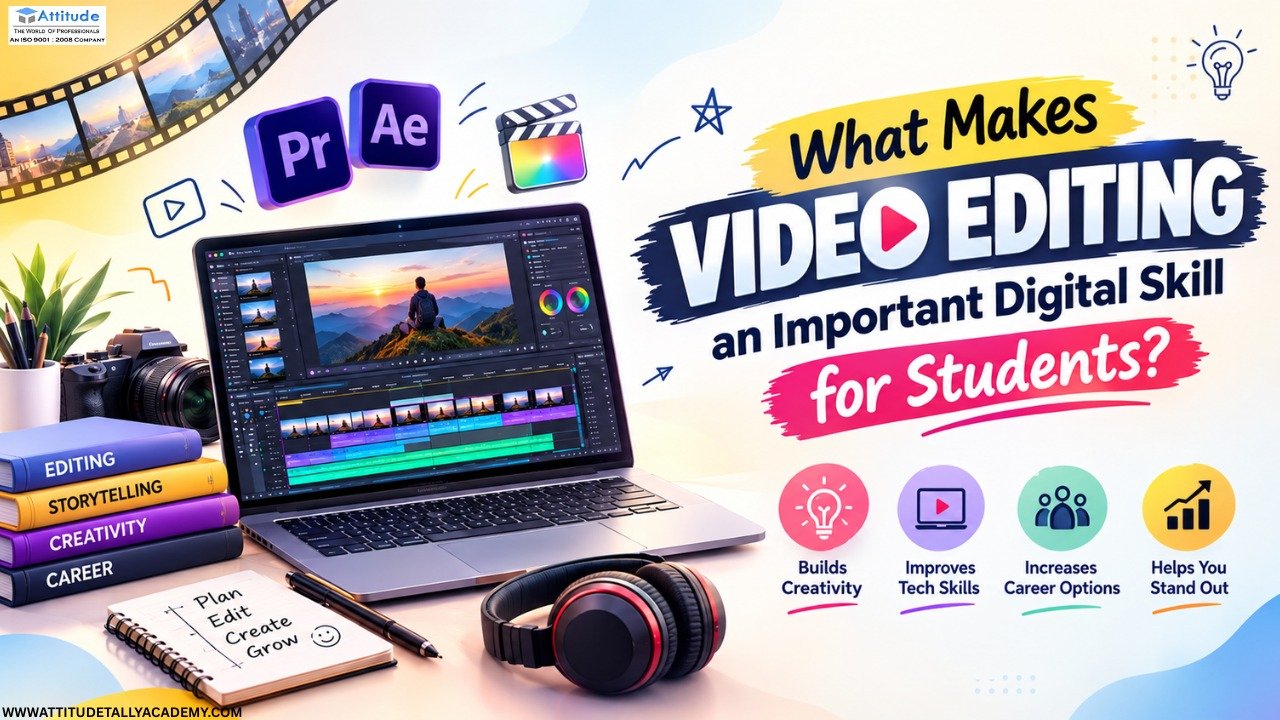
For students, learning video editing can be a smart way to develop a practical digital skill. It can be useful for college projects today and potentially for internships, freelance work, or creative careers later.
So, What Does a Video Editor Really Do?
Video editing is much more than putting one clip after another.
An editor watches the raw footage and decides which moments are worth keeping. They cut unnecessary portions, arrange scenes, adjust sound, add text when needed, and make sure the video flows naturally.
Even a simple two-minute video can require quite a few decisions.
For example, a student might record a five-minute explanation for a college project. The final video may only need two minutes. The editor has to decide which parts are important and which parts can be removed without affecting the message.
This kind of decision-making is one of the reasons video editing courses for beginners can be useful. They help students understand the basics before they start experimenting with complicated editing techniques.
It Can Make You More Creative
Not every useful skill has to come from a textbook.
Video editing gives students a chance to experiment and make their own choices. You can take the same set of clips and create completely different videos depending on how you arrange them.
A fast sequence can make a video feel energetic. Longer shots can make it feel calm. Music can change the mood. A simple text animation can make an important point easier to understand.
Over time, students start developing an eye for what looks good and what doesn’t.
That creative thinking can be useful in other fields too. Someone studying marketing may need to create promotional content. A graphic design student may eventually work with motion graphics. A student interested in social media may want to create short videos for brands or personal pages.
Is It Worth Learning After 12th?
After 12th, students have a lot of choices in front of them. Some already have a clear career plan, while others are still trying to figure out what they enjoy.
For students who are interested in computers, creativity, media, or online content, video editing courses after 12th can be worth exploring.
The advantage is that video editing doesn’t lock you into one particular industry.
You can use it for YouTube, advertising, social media, education, events, entertainment, or freelance projects. It can also work alongside another skill. For example, someone learning digital marketing can use video editing to create better marketing content.
So even if you don’t become a full-time editor, the skill can still be useful.
Starting With Adobe Premiere Pro
Once you understand basic editing, you may want to move towards professional editing software. Adobe Premiere Pro is one option that students can learn as they become more serious about editing.
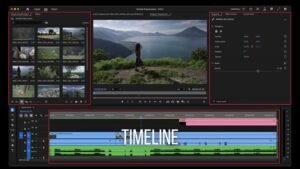
At first, the software can look a little intimidating. There are timelines, panels, tools, effects, audio tracks, and plenty of other options on the screen.
That’s why starting with an adobe premiere pro beginner course can make the learning process easier.
Instead of trying to understand everything at once, beginners can learn the workflow step by step. They can start with importing footage and arranging clips, then move towards audio, text, transitions, colour adjustments, and exporting.
An adobe premiere beginner course should ideally give students enough time to practise these features instead of only explaining them theoretically.
After all, you understand editing much better when you actually sit in front of the software and try things yourself.
Your First Videos Probably Won’t Be Perfect
And that’s completely fine.
Almost everyone who learns editing makes awkward videos in the beginning. Maybe the cuts are too long. Maybe the music is louder than the person’s voice. Maybe there are too many transitions.
These mistakes are actually useful.
When you edit another video, you start remembering what went wrong previously. Slowly, you begin to notice problems before someone else points them out.
This is why practical learning matters so much. If a student attends video editing classes in Karawal Nagar, for example, the value of the training should not only be measured by classroom explanations. There should also be enough opportunity to work on actual projects and understand how editing works in real situations.
Build Something You Can Show People
One of the biggest benefits of video editing is that you can show your progress.
Suppose you’re applying for an internship and your resume says, “I know video editing.” That’s useful, but it doesn’t tell the recruiter much.
Now imagine you can also show three or four projects you’ve edited yourself.
Maybe one is a short Reel, another is a product advertisement, another is a YouTube-style video, and another is a college project. Suddenly, your skill becomes much easier to understand.
These projects can slowly become your portfolio.
Students looking at a video editing course with placement should therefore check more than just the placement claim. Find out whether the training includes practical projects, portfolio development, interview preparation, and useful career guidance.
Learning Locally Can Make Practice Easier
For many students, attending classes near home is simply more convenient. Less travelling can leave more time for college, practice, and personal projects.
Someone searching for video editing classes in Bhajanpura may prefer a nearby option so they can attend regularly. Similarly, a student researching a video editing course in Yamuna Vihar can compare nearby programs based on the syllabus and practical training rather than choosing only because of location.
The same applies to students considering a video editing course in Uttam Nagar.
Before joining any course, look at what you will actually learn. Check whether the training covers the software you want, whether you will work on real projects, and whether you will get feedback on your edits.
A nearby course is convenient, but good training is what will actually help you improve.
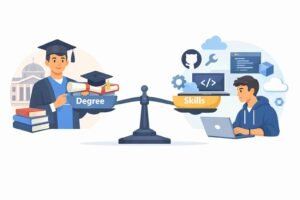
Don’t Choose a Course Just Because It Gives a Certificate
Certificates can be useful. They can show that you completed a particular training program and may have a place on your resume.
But a certificate cannot edit a video for you.
If you’re considering a certified video editing course in Yamuna Vihar, make sure the course also gives enough attention to practical skills. Try to understand whether students work on real assignments and create projects during the training.
Imagine two students applying for the same internship. One has several certificates but very little practical work. The other has fewer certificates but can show a strong portfolio.
The second student may have a much easier time proving what they can actually do.
What Should a Student Learn First?
There is no need to jump straight into advanced effects.
Start with the basics and become comfortable with them.
A beginner should ideally learn how to:
- Organise video files and footage
- Cut and arrange clips
- Work with audio and background music
- Add text and captions
- Use transitions without overdoing them
- Make basic colour adjustments
- Export videos in the correct format
- Create projects for different platforms
Once these things become familiar, you can move towards more advanced areas such as motion graphics, visual effects, colour grading, and professional content production.
Students researching training options, including video editing classes in Karawal Nagar or other nearby areas, can use these points as a simple checklist when comparing courses.
The Best Way to Learn Is to Keep Making Videos
You can watch tutorials for hours, but eventually you have to open the software and start editing.
Take a video recorded on your phone. Remove the unnecessary parts. Add some music. Try subtitles. Change the order of a few scenes and see how the story feels.
Then do it again with another video.
You don’t need a huge project every time. Small projects are enough to build confidence in the beginning.
After a few months of regular practice, you’ll probably notice that you are making decisions much faster than before. Things that once seemed confusing will start feeling normal.
Final Thoughts
Video editing is useful for students because it combines technology with creativity. It teaches you how to work with digital tools, communicate an idea visually, and turn ordinary footage into something meaningful.
You can use the skill for college assignments, social media, YouTube, internships, freelance projects, or simply for your own creative interests.
Whether you start with a beginner-level course, learn Adobe Premiere Pro, or practise independently, the most important thing is to keep creating.
Your first edit doesn’t have to be impressive. Your tenth will be better. Your fiftieth may be much better.
That’s how a simple interest in videos can slowly turn into a real digital skill.Visit us
Suggested link :-